
Best Scuba Masks with GoPro Mounts (Are They Worth It?)

There's a moment every diver has experienced at least once. You're forty feet down, a hawksbill turtle is gliding right past you, the light is filtering through the water in that impossibly perfect way, and your hands are completely full with a camera you've been fumbling with since you hit the surface. By the time you get it pointed in the right direction, the turtle is gone.
That's exactly the problem that scuba masks with GoPro mounts were designed to solve, and when it works well, you get hands-free filming, true point-of-view footage, and nothing between you and the dive itself. But a lot of the options out there were designed for snorkelers floating over shallow reefs, not actual divers descending to depth. So if you're shopping for the best scuba masks with GoPro mounts, this guide covers the real contenders, what separates a good setup from a frustrating one, and which mask we'd actually put on our own faces before dropping in.
Key Insights: Best Scuba Masks with GoPro Mounts
The Apex Tidal Mask is the best all-around option for diving, freediving, and spearfishing
Most alternatives either compromise on fit, field of view, or real dive usability
GoPro mask mounts are worth it for POV footage, but not for cinematic shots
Serious divers often end up using both a mask mount and a handheld setup

Can You Just Attach a GoPro to Any Scuba Mask?
Technically, you can just attach a GoPro to any scuba mask… and plenty of divers try. There are adhesive mounts and clip-on adapters designed to work with almost any mask frame, and they cost almost nothing. But in practice, it's not really that simple. Adhesive mounts shift over time, especially with the pressure changes that come with deeper dives. The camera ends up slightly off-center, or tilted just enough that your footage looks like it was shot by someone who spent the whole dive looking at the seafloor. Clip-on systems can loosen mid-dive, which means either losing your GoPro or spending the second half of the dive distracted by a wobbling camera in your peripheral vision.
Masks with integrated, built-in mounts solve all of this. The mount is part of the frame itself, positioned by people who actually thought about where the camera needs to sit relative to your natural line of sight. If you're serious about filming your dives, this is the only approach worth bothering with.
What Makes a Good GoPro Dive Mask
The most important thing to understand is that the GoPro mount itself is a secondary feature. What you're really buying is a dive mask, and if that mask doesn't perform well underwater, the footage doesn't matter because you'll be too annoyed to use it. A proper dive mask needs to seal consistently, equalize easily at depth, offer a wide and natural field of view, and stay fog-free without constant maintenance. A lot of "camera masks" compromise on one or more of these things in favor of making the mount look impressive on the product page. Keep that filter in mind as you look at your options.
The Best Scuba Masks with GoPro Mounts
This is a genuinely niche category, and the list of options that actually hold up for real diving is shorter than most roundups suggest. Here's what's worth your attention.

Tidal Sports Apex Tidal Mask: Our Top Pick
The Apex Tidal Mask stands out because it doesn’t feel like a “camera mask.” It feels like a high-performance dive mask that happens to capture everything you see.
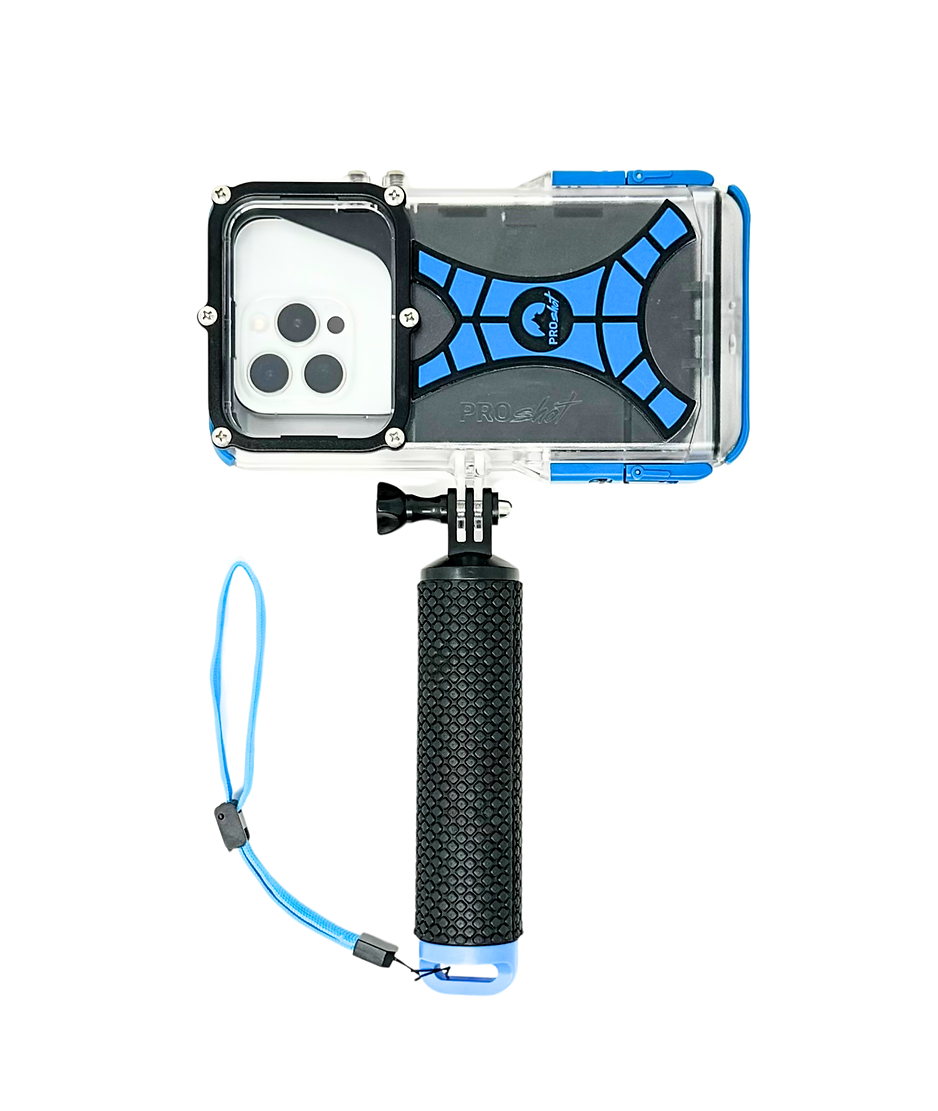
The integrated mount sits above the lenses, aligned with your natural line of sight for a genuine first-person perspective. It's compatible with all GoPros, ProShotCases, and GoPro mount adapters, with an attachment screw that keeps everything locked in whether you're on a shallow reef or pushing depth. From a diving perspective, the low-volume design makes a noticeable difference. It equalizes easily, stays streamlined in the water, and doesn’t create that bulky feeling you get with some camera-focused masks. This is especially important for freediving and spearfishing, but it benefits recreational divers just as much.
Visibility is another strong point. The dual tempered glass lenses give you a wide, natural field of view without distortion. You’re not sacrificing awareness just to capture footage. Another feature that sets it apart from others in the market is the anti-fog system. Instead of relying on sprays, the Apex Tidal uses replaceable Advanced Anti-Fog Films pre-adhered to the inside of the lens, rated for 100 or more dives. For divers who want to capture their underwater experiences without compromising them, this is the setup that gets it right.

MAKO Freedive Mask with GoPro Mount
The MAKO is primarily marketed at freedivers but holds up well for recreational scuba, and it's one of the more affordable options in this category with a genuinely integrated mount. The super low-volume design means easier equalization and less drag, and the integrated mount accepts all GoPro models. User reviews consistently note the camera stays locked in through repeated duck dives and deeper descents, which is a good sign for build quality at the price point.
Where it falls short is anti-fog performance, which is worth flagging. It's manageable with a good defog spray, but it won't handle the problem for you in the way an integrated anti-fog system will. Fit can also vary around the nose bridge. For the price, though, it's a functional option with the mount genuinely built in from the start.

PULUZ Diving Mask with Action Camera Mount
The PULUZ is the budget end of this category, but it's still worth including. The mask has tempered glass lenses with an anti-fog coating, a silicone edge, and a built-in mount that's compatible with GoPros, DJI Osmo Action, Insta360, and most other action cameras, so on paper it ticks the boxes.
In reality, this is a mask designed for casual use in calm, shallow water. The ABS plastic construction and basic silicone skirt aren't built for repeated diving at depth. The anti-fog coating is a spray-on finish rather than a dedicated film or hydrophilic technology, which means performance will degrade over time. If you're a beginner who wants to try mask-mounted filming on a snorkeling holiday before committing to a proper setup, the PULUZ gives you a way to do that cheaply.

Octomask Frameless Dive Mask
The Octomask has been around long enough to have a real following, and it earns some of its reputation. The frameless design keeps it low-profile and streamlined, and the integrated mount is stable enough that you're not thinking about it mid-dive. It works with all GoPro models, uses dual tempered glass lenses, and the low-volume design keeps it close to the face for good visibility and easy clearing.
Where it falls short for some divers is fit and field of view. The frameless construction that keeps it sleek also means less flexibility in how it sits across different face shapes, and some divers find the viewing area narrower than expected. Fogging on longer dives can also be an issue. It's a solid, purpose-built option and a reasonable choice for casual scuba diving, but not one most divers tend to stick with long term.
Comparison at a Glance
Mask | Mount Type | Best For | Worth Knowing |
Tidal Sports Apex Tidal Mask | Built-in | Scuba, freediving, snorkeling | Best all-around dive performance |
Octomask Frameless | Built-in | Casual scuba diving | Fit varies by face shape |
MAKO Freedive Mask | Built-in | Freediving, recreational scuba | Can fog without defog spray |
PULUZ Diving Mask | Built-in | Casual/beginner snorkeling | Budget build, not for regular diving |
What Kind of Footage Will You Actually Get?
A mask-mounted GoPro captures the dive as you live it. Everything you see, the fish darting past, the coral formations, the moment a reef shark cruises into view, all of it gets recorded automatically without you thinking about it. Your hands are free, your attention is on the dive, and the footage comes with it. That's the genuine appeal.
What it doesn't give you is creative control over your underwater photography. The camera goes where your head goes. You can't pan for a better angle or hold on a composition. The footage is authentic and immersive, but it isn't cinematic. Most serious dive filmers end up using a mask mount alongside a handheld setup: the mask running continuously, the handheld for moments when they want to be intentional. If you're just starting out with underwater video, though, a mask mount is the lowest-friction way to bring something home from every dive.
Frequently Asked Questions
Can you attach a GoPro to a regular scuba mask?
You can, using adhesive or clip-on adapters, but the results are usually inconsistent. Mounts shift, alignment drifts, and the footage rarely matches your natural line of sight. Masks with built-in mounts are worth the investment if filming is actually a priority.
Are GoPro mask mounts safe for scuba diving?
Integrated mounts, yes. They're designed as part of the mask and don't add meaningful risk. Add-on mounts are less reliable over time and at depth.
Are full-face masks with GoPro mounts good for scuba?
Not really. They're designed for snorkeling, and using them for scuba introduces complications with equalization and regulator use. Stick to traditional mask designs for anything below the surface.
What's the best scuba mask with a GoPro mount for actual diving?
For a mask that performs as well underwater as it does on camera, the Apex Tidal Mask is our recommendation. It's the one we put on our own faces, and it's the one we'd put on yours.
Which Scuba Mask with GoPro Mount Should You Choose?
When you're shopping for the best scuba masks with GoPro mounts, the right answer isn't the one with the most impressive camera specs. It's the one that disappears once you're underwater, seals properly, equalizes easily, stays clear from the first dive to the last, and happens to be capturing everything you see the whole time. Most options in this category ask you to compromise somewhere. The Tidal Sports Apex Mask is the one that doesn't make you choose between diving well and filming well, and in a category where that's surprisingly rare, that matters quite a bit.
Get in the water. The turtle isn't going to wait around.



I usually play during short breaks, and eggy car online loads quickly without any extra setup. Easy to jump into for a few minutes https://eggycargame.cc
This is one of the few gear writeups that actually feels written by someone who dives, not someone copying product specs from Amazon listings. The point about a GoPro mask still needing to be a good dive mask first is spot on.