
Underwater photography: how can it help protect our oceans?

Updated: Apr 24
The ocean is often described as the silent world, but for those of us who dive beneath the surface, we know it’s anything but quiet. It is a vibrant, bustling and increasingly fragile ecosystem. While many see underwater photography as a way to capture a stunning new profile picture or a memory of a tropical vacation, its true value runs much deeper.
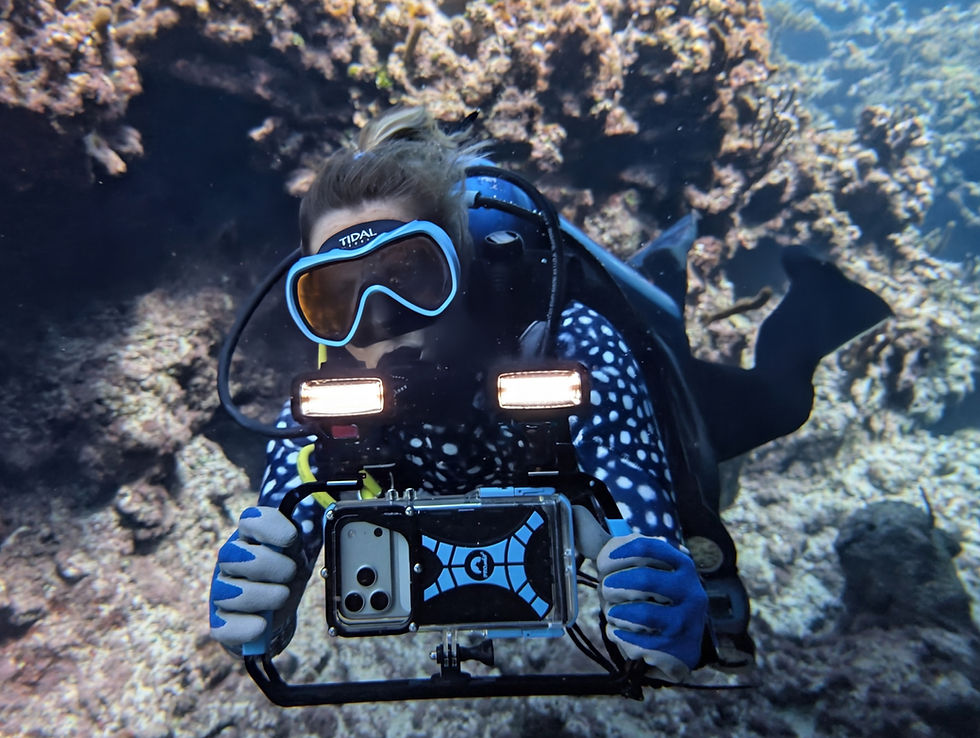
In the digital age, a single image can do more for conservation than a thousand-page scientific report. Here is how your underwater shots, whether taken on a professional DSLR or with a ProShot Case for iPhone or Android, are helping to save our blue planet.
1. Creating an emotional connection
It is difficult for people to care about what they cannot see. Most of the world’s population will never see a coral reef in person, let alone a hunting reef shark. Photography bridges that gap. By bringing the beauty of the abyss to the surface, photographers turn the ocean from an abstract concept into a living, breathing community that feels worth saving.
When people see the intricate details of marine life, they begin to understand that these creatures aren't just statistics; they are living beings within a complex web. As showcased by the latest winners of the Underwater Photographer of the Year, visual storytelling is the most powerful tool we have to shift public perception toward active protection.
2. Documenting change in real-time
Photographers act as the eyes of the scientific community. Citizen science has exploded in recent years, with divers uploading photos of coral bleaching, invasive species, and plastic pollution to global databases.
These images provide a visual timeline of our changing environment. For instance, when we look at tourism and ocean sustainability facts, the data becomes much more impactful when paired with before and after photos of a reef. Photography provides the undeniable proof needed to hold industries accountable and push for stronger maritime policies.
3. Promoting responsible tourism
The rise of underwater photography has shifted the focus of many coastal economies. In many regions, a shark or a manta ray is now worth significantly more alive, as a subject for photographers, than dead for its fins or meat. This tourism economy encourages local communities to protect their waters to ensure tourists keep coming back to capture that perfect shot.
However, being a photographer also comes with a responsibility to be a sustainable traveller. According to this guide to ethical underwater photography, this means:
Practicing perfect buoyancy to avoid touching the reef.
Using reef-safe sunscreen to prevent chemical runoff.
Supporting operators who prioritize the environment over a close-up.
The Power in Your Pocket
You don’t need a five-figure camera rig to make a difference. The best camera for conservation is the one you have with you. By sharing your underwater experiences authentically, you aren't just showing off a cool hobby, you are advocating for a world that needs every voice (and every lens) it can get.


Comments