
Why Dive Masks Leak and How to Keep Water Out of Your Snorkel Mask

A leaking dive mask is the ultimate buzzkill in the water. Whether you are a scuba diver managing your air supply at 30 meters or a snorkeler floating on top of a reef, a compromised seal ruins your visibility, is annoying, and causes task overloading.
The good news? A leaking mask is rarely due to a defective piece of equipment. Most often, it is due to problems that can be easily solved. By understanding the exact mechanism of why dive masks leak, you can enjoy a bone-dry, crystal-clear experience on every single dive.
What Makes a Perfect Underwater Seal
To stop your mask from leaking, you first need to understand the engineering behind your gear. A modern dive mask relies entirely on a flexible silicone skirt, creating a seal between your skin and mask. It does not stay dry by crushing against your skull; it stays dry by establishing a uniform vacuum pocket.
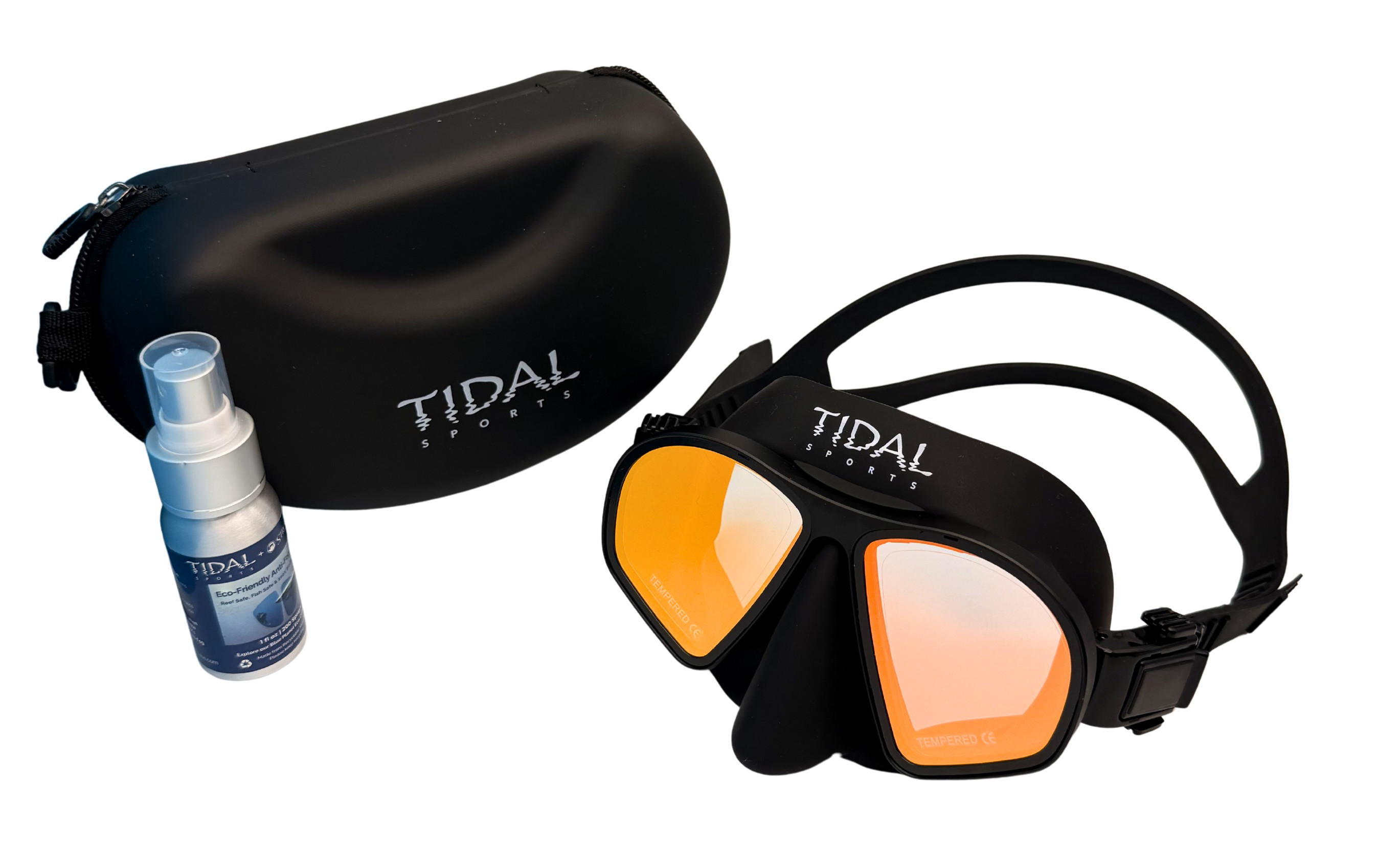
Bear in mind, historically, dive masks were built with stiff rubber skirts that required immense physical force to remain sealed. Modern, high-quality masks use liquid-injected, hypoallergenic silicone. This material is incredibly soft, supple, and reactive. Premium masks, such as the Single Lens Tidal Mask, often feature double-sealed skirts. An outer edge that stops major water entry and an inner featheredge skirt that molds precisely into the minor divots and curves of your face.
Internal Mask Volume: High vs. Low
Masks are broadly categorized by their internal volume, which dramatically affects how they behave when a leak occurs:
High-Volume Masks: These masks feature a traditional, rigid frame that sits farther from your face, providing large glass panels and an expansive, panoramic field of view. However, they are harder to clear.
Low-Volume Masks: These masks sit close to your face, minimizing the air pocket inside. Favored by freedivers, spearfishermen, and technical divers, low-volume designs are streamlined and are easier to clear.
Why Do Dive Masks Leak?
Masks can leak for a variety of reasons, including poor fit, improper use, and hair.
By far the biggest reason masks leak is that they don't fit correctly. No matter what you do it will always leak. Similar to the way a pair of shoes that is one size too big or too small will always be uncomfortable regardless.
How to Pick a Mask That Fits
Picking a mask that fits you is simple as long as you follow 3 simple steps:
The Vacuum Test
Tilt your head up and place the mask gently on your face without using the strap. Inhale a tiny sip of air through your nose, then look down and shake your head gently. To pass: The mask remains securely stuck to your skin. If it falls, your mask failed, and it is not a perfect fit.
Skirt Perimeter Visual Check
Look in a mirror with the mask resting on your face. Check that the silicone skirt flares outward smoothly like a suction cup. You should see no rolled edges, folds, or gaps at the temples or corners.
The Mouthpiece Simulation
Put a snorkel or regulator mouthpiece in your mouth and bite down comfortably to simulate jaw movement. Re-run the Vacuum Test and skirt perimeter check to ensure that the altered shape of your jaw does not break the seal.
How not to use your Dive Mask
Using your masks incorrectly can also cause small leaks. Improper usage falls into 3 categories.
The Over-Tightening Paradox
Cranking down on your mask strap can cause it to leak. The cranking pressure causes the soft silicone skirt to buckle, wrinkle, and fold over itself. These create tiny V channels along your temples and jawline, allowing water to trickle in. Never over-tighten! The strap is merely to keep the mask stable on your face; it is held in place by the ambient water pressure.
Asymmetrical Strap Positioning
Strap alignment is key to keeping uniform tension along the face. Too low on your head, it yanks the bottom of the mask downward, breaking the seal above your upper lip. Too high: it sits too high on the crown of your head, lifting the top of the mask and exposing your forehead line.
Nose Exhalation and Jaw Movement
Your facial geometry changes constantly when you smile, laugh, or clench your jaw tightly. These shifts can create gaps beneath the lower skirt. Furthermore, many beginners exhale through their nose. Blowing air into the mask pocket breaks the internal negative pressure seal, allowing water in.
Dealing With Hair To Stop Your Dive Mask from Leaking
Long hair presents two challenges: stray strands breaking the forehead seal, and tangling hair at the back of the head. Fortunately, the fixes are pretty simple.
Clear the hairline
Before pulling your mask down, ensure that bangs, baby hairs, and sideburns are entirely cleared away from the forehead and temple borders of the mask skirt. If in doubt, ask a dive buddy to check.
Secure your hair
Secure your hair before entering the water. High ponytails or loose buns can block your mask strap, causing it to misalign. Opt for tight French braids, a low ponytail, or use a thin swim cap or neoprene dive hood to keep your hair under control.
Invest in a Slap Strap
Silicone straps are sticky. As you adjust your mask, they pull, catch, and twist long hair, causing issues and potential leaks. Sliding a soft neoprene and stylish mask strap cover like the Tidal Sports strap cover (often called a "slap strap") solves this issue. This allows the strap to glide over long hair, keeping it perfectly positioned on the back of your head.
Dealing with Facial Hair
The bottom line is that facial hair is the natural enemy of the perfect seal. Because every strand acts like a microscopic straw, breaking the silicone seal and allowing water to enter. Ultimately, if you have facial hair, you have 4 options:
Live with it: learn to deal with a little water in your mask and keep on diving.
Shave: maintaining a clean-shaven face during a dive vacation is probably the easiest and simplest solution.
Shave a landing strip: Use a razor to shave a tiny "landing strip" below your nostrils. This creates a patch of bare skin for the mask skirt to seal to.
Reef-Safe Barriers: If any shaving is a no-go. Apply a generous layer of reef-safe silicone grease, eco-friendly mustache wax, or a petroleum-free balm along the top of your mustache where the mask sits. This can fill the space, allowing the mask to seal.
Snorkel Masks and the "Torque Effect"
When snorkeling, the main causes of leaks are the same as scuba diving. However, the snorkel presents another problem: the "Torque Effect"! When you attach a snorkel to your mask strap using a rigid plastic keeper, the snorkel tube acts like a lever arm. As you swim, the water pushes against the snorkel tube, creating mechanical torque. This torque yanks the left side of your mask strap, twisting the silicone skirt away from your cheekbone and causing a small leak.
To stop this, use a flexible silicone or neoprene keeper rather than a rigid plastic clip. This allows the snorkel to move freely in response to wave action without pulling your mask, and allowing water to enter.
Final Thoughts
A leaking dive mask does not necessarily mean disaster. More often than not, keeping water out comes down to simple, specific adjustments rather than buying expensive new gear. By prioritizing proper fit during topside testing, keeping strap tension relaxed, and managing stray hair and mustaches with smart barriers, you can easily maintain a bone-dry seal for your entire dive.
Remember to rinse your mask with fresh water after every outing to keep the delicate silicone supple and free of debris. With these easy habits, you can stop fighting steady trickles and focus on the incredible ocean world around you.


I never realized how much engineering goes into something as simple as a dive mask. The explanation of silicone skirts and the vacuum seal makes it much clearer why fit matters so much. I like the comparison with older stiff rubber designs, too. It reminds me of how precision and control matter in Slope Rider—small differences can have a big impact on performance.