
Full Face Snorkel Masks vs Traditional Snorkel Masks: Pros and Cons
- Kandice Vincent
- 1 hour ago
- 8 min read

When exploring snorkeling gear, the mask you choose is arguably the most important decision. It affects your visibility, your comfort, and how confident you feel once you’re in the water. Full face snorkel masks are newer to the scene, and on the surface, they may seem like an obvious upgrade. You can breathe through your nose, your whole face is covered, and everything feels more natural right away. But the decision between full face snorkel masks vs traditional snorkel masks is more nuanced.
At Tidal Sports, this is something we’ve explored from real time in the water, not just product specs. We design and test traditional masks across snorkeling, freediving, and travel conditions, and we’ve also spent time evaluating full face snorkel masks to understand where they work and where they fall short. What becomes clear quickly is that these two setups are built for very different types of experiences.
This guide breaks down exactly how full face snorkel masks vs traditional snorkel masks compare, where each one makes sense, and what most people miss when making this decision.
Key Takeaways: Full Face Snorkel Masks vs Traditional Snorkel Masks
Full face snorkel masks allow you to breathe through your nose and mouth and offer a wide, open field of view at the surface
They are limited to surface use, cannot be used for equalizing, and are not suitable for diving below the surface
Traditional snorkel masks require a separate snorkel but offer more control, better fit options, and greater versatility
Traditional setups are easier to clear, more adaptable, and can be used for both snorkeling and freediving
For most users, especially those who want flexibility and a better long-term experience, traditional snorkel masks are the more practical choice

What Is a Full Face Snorkel Mask?
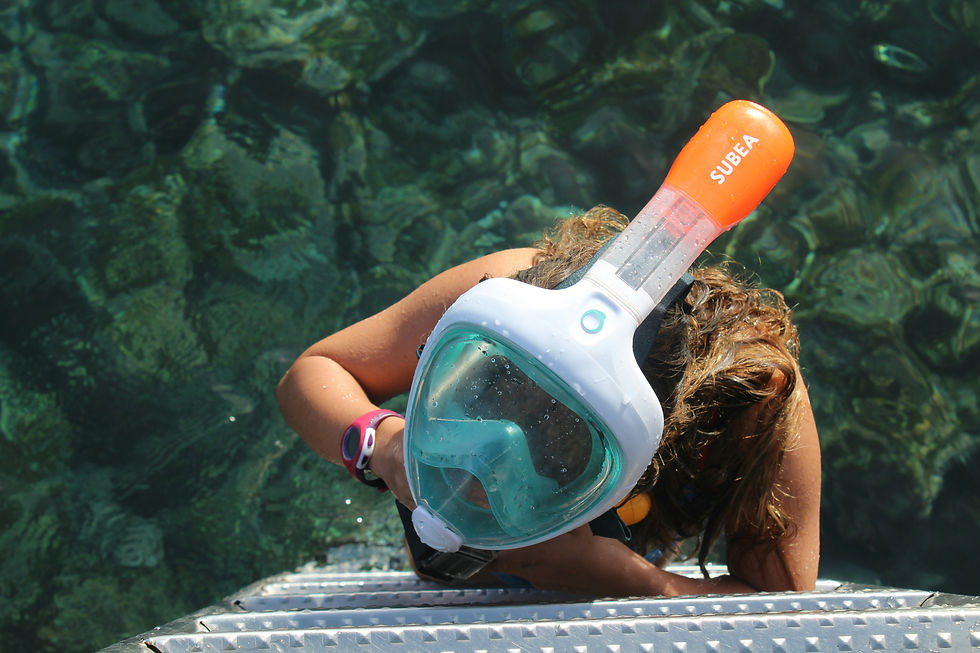
A full face snorkel mask covers your entire face and integrates a breathing tube directly into the top of the mask. Instead of using a separate snorkel and mouthpiece, you breathe naturally through both your nose and mouth inside the mask. This design is what makes full face snorkel masks so appealing, particularly for beginners. The experience feels closer to breathing on land, and there’s no need to get used to a mouthpiece or adjust your breathing technique.
Full face snorkel masks are designed specifically for:
Surface snorkeling
Calm, shallow water conditions
Short, relaxed sessions
They are not designed for diving or going below the surface.
What Is a Traditional Snorkel Mask?
A traditional snorkel mask setup includes a mask that covers your eyes and nose, along with a separate snorkel that you breathe through using a mouthpiece. This system has been the standard for decades and is used across snorkeling, freediving, and general ocean exploration.
Because the mask and snorkel are separate, you have more control over how you move, breathe, and interact with the water. You can lift your head, clear your snorkel, dive below the surface, and adjust your equipment easily.
Traditional snorkel masks are used for:
Snorkeling
Freediving and duck diving
Spearfishing
Travel and general ocean use
The separation between mask and breathing system plays a major role in both flexibility and performance.
Quick Comparison: Full Face Snorkel Masks vs Traditional Snorkel Masks
Feature | Full Face Mask | Traditional Snorkel Mask |
Breathing | Nose and mouth breathing feels natural | Mouth breathing through snorkel |
Comfort | Even pressure across face | Depends on fit, but highly customizable |
Field of View | Wide, panoramic feel | Excellent with modern single-lens masks |
Fit Options | Limited sizing and adjustability | Wide range of shapes and styles |
Equalization | Not possible | Easy and standard |
Diving Below Surface | Not suitable | Fully capable |
Ease of Use | Very beginner-friendly | Short learning curve |
Maintenance | More complex | Simple and easy |
Travel | Bulkier and harder to pack | Lightweight and travel-friendly |
Best For | Surface snorkeling | Snorkeling, freediving, and all-around use |

Breathing
One of the biggest draws of full face snorkel masks is how they handle breathing. With a full face mask, you breathe normally through your nose and mouth, which removes the need for a snorkel mouthpiece. For many people, especially those new to snorkeling, this feels more relaxed and intuitive right away.
With a traditional snorkel setup, you breathe through a mouthpiece connected to your snorkel. There is a short adjustment period, but it becomes second nature quickly, and most people stop noticing it after a few minutes in the water.
There is, however, more to consider beyond that initial comfort. Full face snorkel masks have a larger internal air space, which means some of the air you exhale can remain inside the mask before being cleared. Over time, this can create a slightly heavier breathing sensation compared to a traditional snorkel, which moves air more directly in and out.
So while full face snorkel masks can feel easier at first, traditional snorkels tend to feel more consistent over longer sessions.
Comfort and Fit
Full face snorkel masks distribute pressure across your entire face, which can feel comfortable at first, especially for people who don’t like using a snorkel mouthpiece. They also create a sealed environment that can feel secure in calm water.
The tradeoff is that fit is less customizable. You are choosing a single structure that needs to seal across your entire face. If the fit isn’t quite right, there is very little you can adjust beyond tightening the straps. Traditional snorkel masks offer far more flexibility. They come in a range of shapes and configurations, making it easier to find something that actually fits your face well.
That includes:
Single lens masks for a more open field of view
Dual lens masks for a slightly lower profile and easier equalization
Freedive masks with lower internal volume for breath-hold efficiency
You also have options in skirt design and color, which can affect light, glare, and overall comfort underwater. If you’ve ever tried a mask that didn’t quite seal properly, you’ll know how important this is. The fit of your mask affects visibility, leak prevention, and how relaxed you feel during a dive. That level of choice simply doesn’t exist with full face snorkel masks in the same way.
Field of Vision
Full face snorkel masks often feel more open visually because of their large front panel. This can create a wide, panoramic effect at the surface, which many people enjoy. However, the difference is not always as dramatic as it seems. Modern single-lens traditional masks offer excellent visibility, especially when the lens sits closer to your eyes and the fit is dialed in properly. In practice, visibility depends more on fit, lens design, and clarity than on size alone.
Safety and Ease of Use
Full face snorkel masks are designed to be simple. You put them on, breathe normally, and stay at the surface. For beginners, this simplicity can make the first experience feel more accessible. However, there are some limitations to consider. Clearing water from a full face mask is more involved than with a traditional setup, and you rely entirely on the mask’s airflow system functioning properly.
With a traditional snorkel setup, each component works independently. If water enters the mask or snorkel, it can be cleared quickly using basic techniques that are easy to learn and repeat. That simplicity and control is one of the reasons traditional setups remain the standard across more experienced users.
Equalization and Diving Below the Surface
This is one of the most important differences when comparing full face snorkel masks vs traditional snorkel masks, and it’s often overlooked. With a traditional mask, you can pinch your nose to equalize pressure in your ears. This allows you to comfortably dive below the surface, even if it’s just a few feet down to get a closer look at marine life.
With a full face snorkel mask, you don’t have access to your nose. That means:
You cannot equalize pressure
You cannot comfortably dive below the surface
You are limited to staying at the top of the water
This is why full face snorkel masks are strictly surface-use equipment. If you enjoy duck diving or exploring below the surface, a traditional setup is the only practical option.
Maintenance and Reliability
A traditional snorkel mask is simple to maintain. You rinse it, store it, and occasionally replace a strap. Full face snorkel masks are more complex by design. They integrate multiple systems into one unit, which means:
More components to clean and maintain
More potential points of failure
More attention required between uses
If something goes wrong with a traditional setup, it is usually easy to identify and fix. With a full face snorkel mask, troubleshooting can be less straightforward.

Travel and Practical Use
If you travel with your gear, this one is pretty straightforward. Masks are often the one piece of gear that people choose to bring because fit is so personal. A mask that seals properly can make or break the experience. Traditional snorkel masks are compact, lightweight, and easy to pack. You can bring one anywhere without giving it much thought and pair it with a snorkel at your destination. Full face snorkel masks are bulkier and take up more space. They also offer less flexibility if your plans change or if you want to do more than surface snorkeling.
Where Full Face Masks Actually Make Sense
There are situations where full face snorkel masks can be a good option.
They work well for:
First-time snorkelers who want the easiest possible experience
Calm, shallow water conditions
Short, relaxed sessions at the surface
They can help reduce the initial learning curve and make the experience feel more approachable.
Why Most People Still Choose Traditional Snorkel
It comes down to flexibility, fit, and long-term usability. Traditional snorkel masks allow you to move freely in the water, dive below the surface, and adjust your setup as needed. They are easy to maintain, easy to travel with, and easy to trust once you’re comfortable using them. That adaptability is why they remain the go-to choice for people who spend more time in the water.

FAQs: Full Face Snorkel Masks vs Traditional Snorkel Masks
Are full face snorkel masks safe?
Full face snorkel masks can be safe when used properly at the surface in calm conditions. However, they are designed specifically for surface snorkeling and should not be used for diving or deeper exploration..
Do full face snorkel masks cause CO₂ buildup?
Full face snorkel masks have a larger internal air space than traditional snorkels, which means airflow design is important. Well-designed masks use separate channels to manage inhaled and exhaled air, but some users may notice heavier breathing compared to a traditional snorkel, which cycles air more directly.
Can you dive underwater with a full face snorkel mask?
No. Full face snorkel masks are not designed for diving. You cannot equalize pressure because your nose is covered, and the mask is not built to be used or cleared underwater.
Do full face snorkel masks fill with water underwater?
Most full face snorkel masks include a dry-top system that helps prevent water from entering through the snorkel. However, they are not designed to function underwater, and if submerged, they can become uncomfortable and difficult to manage compared to a traditional setup.
Are full face snorkel masks better for beginners?
They can feel easier at first because you can breathe naturally, but traditional snorkel masks offer more flexibility and are better suited for a wider range of conditions as you gain experience.
What are the disadvantages of full face snorkel masks?
They are limited to surface use, offer less flexibility, can feel bulkier, and do not allow for equalization or diving below the surface.
So, Which One Should You Choose?
If you’re planning relaxed, surface-level snorkeling and want something that feels easy right away, a full face snorkel mask can be a good place to start. But if you want more flexibility, a better fit, and the ability to move naturally in the water, a traditional snorkel mask is the better choice in most cases.
It gives you:
More control over your breathing and movement
The ability to dive below the surface and equalize comfortably
Better compatibility with different conditions and experience levels
Full face snorkel masks have their place, but they’re built for a very specific type of use. Once you move beyond calm, surface-only snorkeling, their limitations become more noticeable. If you’re looking for something you can rely on across different environments, it’s worth choosing a mask that fits properly, stays clear, and performs consistently over time. At Tidal Sports, we’ve designed our masks with exactly that in mind. From single lens to dual lens and low-volume options, each one is built to prioritize fit, clarity, and long-term performance in the water.
Explore our full range of dive masks to find the right fit for your next dive.


Comments